
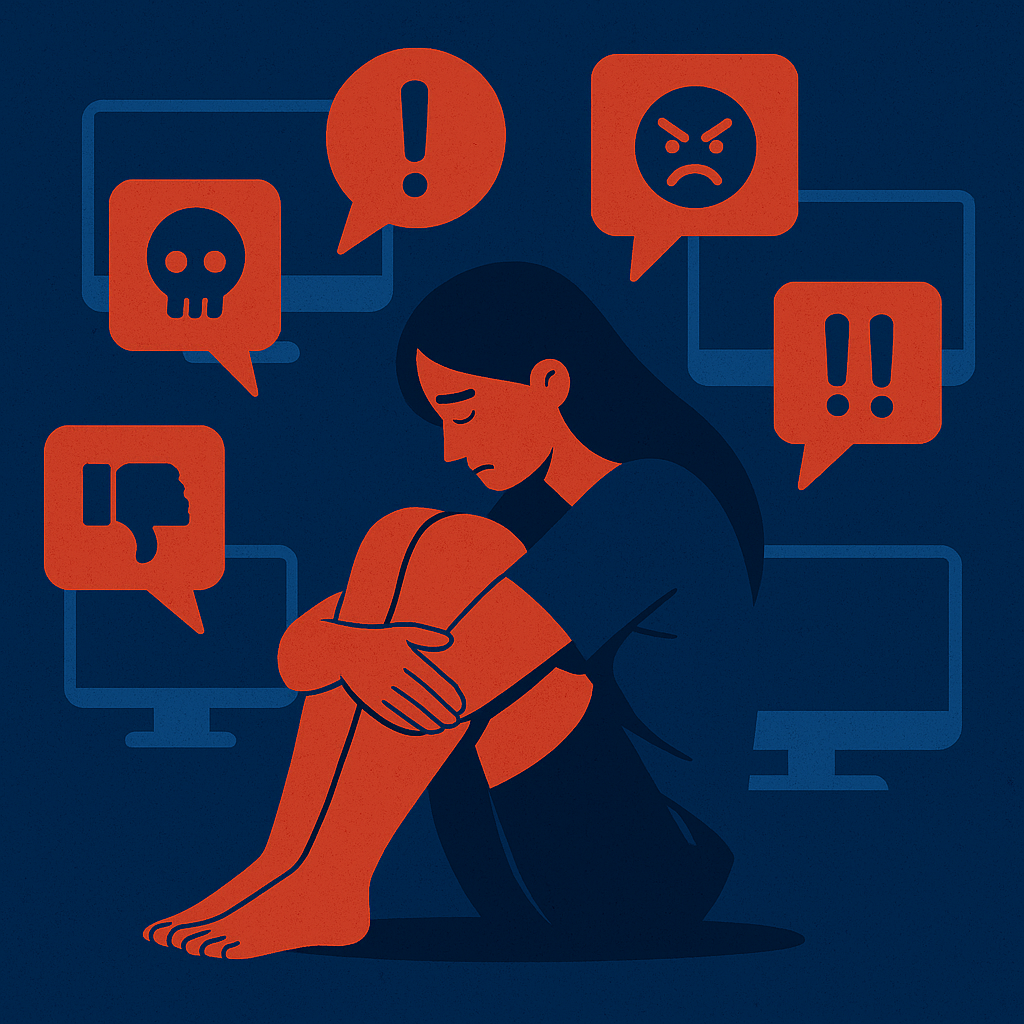
The digital world has changed the way we live, communicate, and express ourselves — including in sport. Athletes today don’t just compete on the track, court, or field; they also live part of their careers online. Social media allows them to share achievements, connect with fans, and inspire future generations.
But for many female athletes, the same space that celebrates their success can also become a source of fear, anxiety, and emotional pain. Behind every hateful comment, fake message, or threatening post lies something more than “just words.” It’s a form of digital violence, and its impact is real.
🌐 What Is Digital Violence?
Digital violence includes any act of harassment, abuse, or intimidation that takes place online or through digital devices. For women in sport, this can mean:
- Cyberbullying – repeated insults, mocking, or targeted hate messages.
- Sexist or sexualized harassment – comments about appearance, inappropriate messages, or image manipulation.
- Doxing – publishing personal information (like home address or phone number) to intimidate.
- Deepfakes and image abuse – using technology to create fake, harmful content.
- Threats and blackmail – emotional coercion or extortion based on private data or images.
These behaviors can occur on social media, in private messages, or even in professional communication platforms. And while they often leave no physical marks, their emotional damage can be just as deep as physical harm.
🧠 The Emotional Toll of Cyber Harassment
Cyber harassment affects mental health in profound ways. Studies have shown that victims of online abuse experience increased levels of stress, anxiety, depression, and fear, which can directly impact both performance and motivation.
Female athletes, in particular, face a unique challenge – they must maintain public visibility for their careers while constantly navigating online hostility. Some consequences include:
- Loss of confidence and self-esteem – persistent criticism or objectification can erode one’s sense of self-worth.
- Social withdrawal – avoiding social media or public appearances out of fear of further attacks.
- Sleep disturbances and anxiety – due to ongoing fear of being targeted again.
- Decline in performance – mental fatigue and distraction can reduce focus, training quality, and results.
These emotional effects often go unseen – hidden behind a smile, a post, or a medal photo. Yet they remind us that mental health and digital safety are inseparable parts of athlete well-being.
💬 “Ignore it” Is Not Enough
Too often, victims of digital violence are told to “just ignore it.” But ignoring harassment doesn’t make it disappear – it simply leaves it unaddressed.
For athletes, who depend on public engagement for sponsorships and recognition, silence can feel like losing both their voice and their identity.
Digital violence is not a personal failure. It’s a social issue that requires education, empathy, and institutional action. Clubs, federations, and organizations must recognize cyber harassment as a real threat and provide safe reporting mechanisms, mental health support, and awareness training.
💡 The SAFE SPORT Response
The SAFE SPORT – Cybersecurity for Women Athletes project, co-funded by the Erasmus+ Programme of the European Union, brings together experts from Bulgaria, Estonia, North Macedonia, and Serbia to address exactly this challenge.
Through research, education, and awareness campaigns, the project aims to:
- Empower women athletes to protect themselves online;
- Educate coaches and sport professionals about the emotional impact of cyber harassment;
- Create a Cybersecurity Toolkit with practical tools for prevention and response;
- Promote open dialogue about digital safety and mental health in sport.
By combining cybersecurity knowledge with psychological support, SAFE SPORT promotes an environment where athletes can feel secure both on the field and online.
🤝 Breaking the Silence
The first step toward healing is to talk about it. When athletes share their experiences, they help others understand that digital violence is not an isolated issue – it’s a collective concern.
Teammates, coaches, and even fans have a role to play. Offering emotional support, standing up to hate speech, and reporting harmful content can make a difference.
Building a safer digital sport community requires compassion, education, and solidarity. Together, we can shift the online culture from judgment to empathy, from hate to respect.
🧩 Healing Through Awareness
Cyber harassment should never be normalized or minimized. A single message can leave lasting scars, but awareness, understanding, and community support can turn that pain into resilience.
Every woman athlete deserves to feel safe expressing herself – on the field, in interviews, and online.
Every team deserves an environment where respect is stronger than hate.
And every sport organization has the responsibility to make that possible.
💬 Final Thought
Digital violence is real – and acknowledging it is the first step toward ending it.
Through the SAFE SPORT project, we are not only protecting digital identities but also safeguarding emotional well-being. Because when women in sport feel safe to be themselves, both online and offline, they can truly thrive – and inspire others to do the same.