
Why Small Sports Clubs Need Cybersecurity Too
Cybercriminals don’t only target big organisations.
When people think about cyberattacks, they often imagine multinational companies, banks, or government institutions.
Small sports clubs rarely consider themselves a target.
“We’re just a local club.”
“We don’t have valuable data.”
“No one would be interested in us.”
Unfortunately, cybercriminals don’t think that way.
Today’s attacks are increasingly automated. Criminals don’t always choose their victims – they scan thousands of organisations looking for the easiest opportunity.
For many local sports clubs, that opportunity exists without anyone realising it.
Small clubs hold more valuable information than they think
Even volunteer-run sports organisations manage sensitive information every day.
This may include:
- names and contact details of members;
- children’s emergency contacts;
- payment records;
- bank account details;
- medical or accessibility information;
- volunteer and coach records;
- competition registrations.
While this information may seem ordinary, it has real value to cybercriminals.
Protecting members also means protecting their personal data.
Volunteers are the biggest strength – and sometimes the biggest vulnerability
Most grassroots sports clubs rely heavily on volunteers.
Parents organise competitions.
Coaches manage registrations.
Committee members handle finances after work.
Few of them have formal cybersecurity training.
This isn’t a weakness—it’s simply the reality of community sport.
But it also means that a convincing email, fake invoice or suspicious attachment can easily be trusted by someone trying to help the club.
Cybersecurity should never depend on technical expertise alone.
Simple awareness can prevent costly mistakes.
Is your Facebook page really secure?
For many clubs, Facebook is the public face of the organisation.
It’s where parents receive updates.
Athletes celebrate achievements.
New members discover the club.
Sponsors learn about activities.
If a page is hacked, the consequences can be serious.
Attackers may:
- remove administrators;
- publish inappropriate content;
- impersonate the club;
- send fraudulent messages to followers;
- request payments through fake campaigns.
Losing access to a social media account can damage trust that has taken years to build.
Using two-factor authentication and limiting administrator access are simple but powerful ways to reduce this risk.
Payment fraud is becoming more sophisticated
Many clubs regularly pay for:
- equipment;
- transport;
- accommodation;
- competition fees;
- facility hire.
Cybercriminals know this.
One increasingly common tactic is sending fake invoices that appear to come from trusted suppliers or event organisers.
The email may look genuine.
The logo may be correct.
Even the language can appear professional.
The only difference is the bank account.
A quick verification by phone before making unusual payments can save thousands of euros.
Email scams don’t only affect large organisations
Imagine receiving an email that appears to come from the club president.
It says a payment is urgent.
Or that registration details must be updated immediately.
Or that a document needs to be opened.
These messages often create a sense of urgency because people are more likely to react quickly than carefully.
Before clicking links or downloading attachments, take a moment to verify the sender.
One extra minute can prevent a major incident.
Member databases deserve protection
Sports clubs often collect personal information simply to organise activities.
But what happens if that information is lost, stolen or accidentally shared?
A compromised database can affect:
- athletes;
- parents;
- volunteers;
- coaches;
- partner organisations.
Protecting personal information isn’t just a legal responsibility.
It’s part of creating a safe sporting environment where members know their information is treated with care.
Cybersecurity is part of safeguarding
Safeguarding in sport traditionally focuses on physical and emotional well-being.
Today, digital safety deserves the same attention.
Helping members feel safe also means:
- protecting their personal information;
- preventing identity theft;
- reducing online fraud;
- responding effectively to digital incidents.
A secure club is a more trusted club.
Five simple steps every sports club can take today
You don’t need an IT department to improve cybersecurity.
Start with the basics:
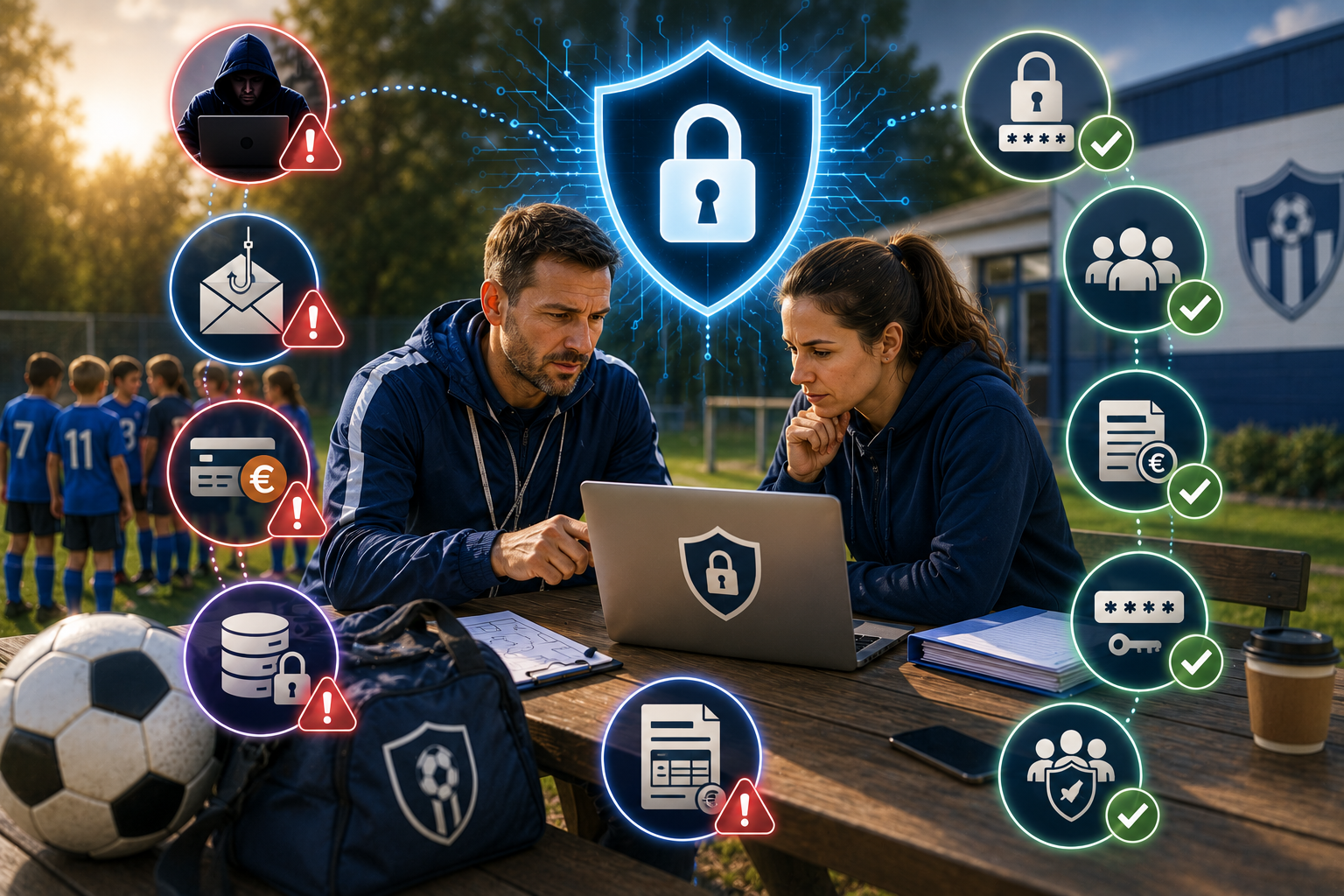
✅ Enable two-factor authentication on all club accounts.
✅ Limit administrator access to trusted people.
✅ Verify payment requests before transferring money.
✅ Use strong, unique passwords for every platform.
✅ Talk about cybersecurity with coaches and volunteers – not just when something goes wrong.
Small improvements made consistently can prevent major problems.
Strong clubs protect more than sport
Grassroots clubs are built on trust.
Parents trust coaches with their children.
Volunteers trust each other.
Communities trust clubs to create safe environments where everyone can participate and thrive.
Cybersecurity helps protect that trust.
Because in today’s digital world, safeguarding doesn’t stop at the training ground – it continues online.