
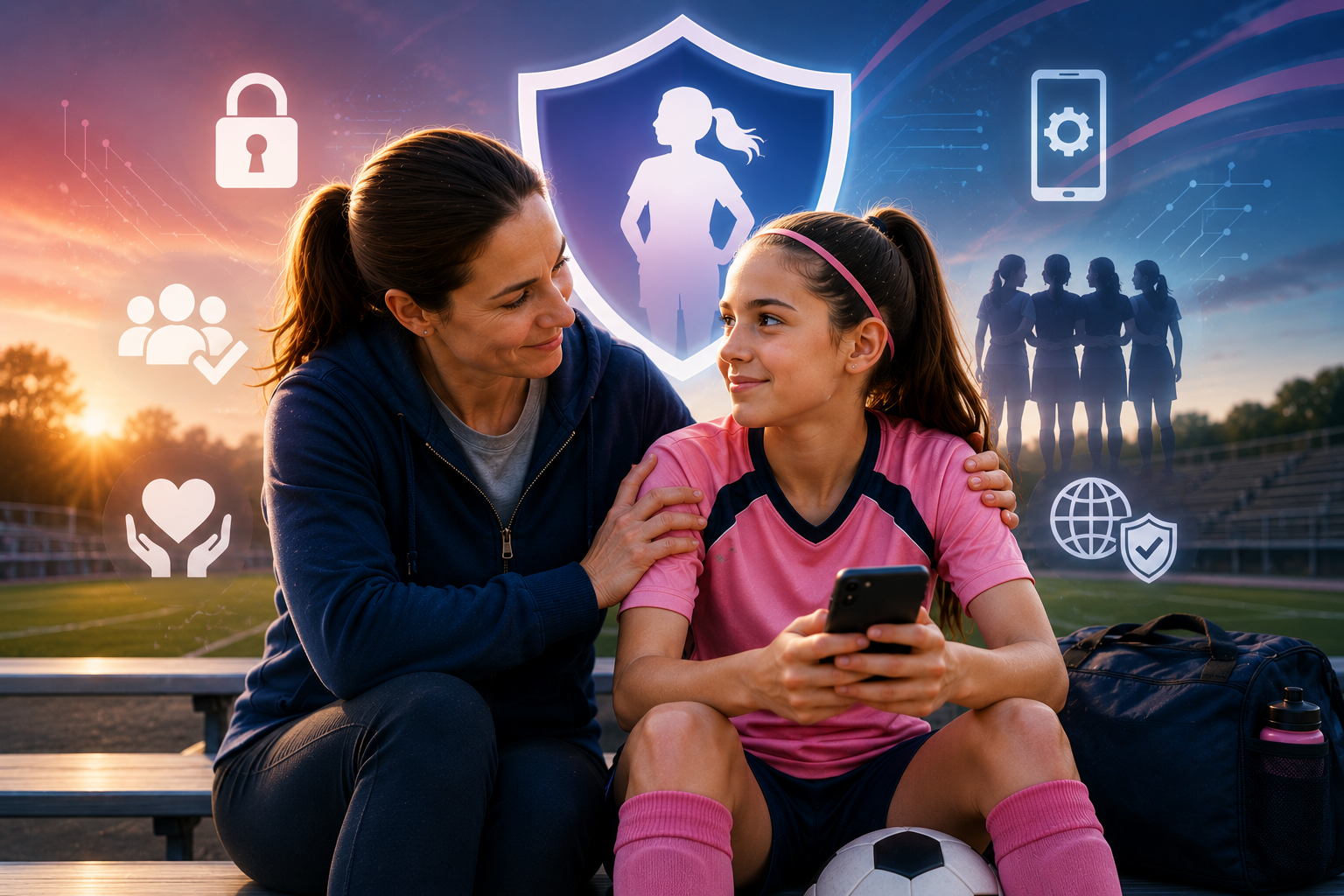
Sport no longer ends when training finishes.
Years ago, sport happened on the field, in the gym or at competitions.
Today, it continues online.
Young athletes communicate with teammates through messaging apps, celebrate victories on social media, follow their sporting heroes, and often build their first public profiles long before they reach elite level.
This digital world offers incredible opportunities—but it also creates new responsibilities for parents.
Teaching digital safety should become as normal as teaching children to warm up before training or wear protective equipment.
Every photo shares more than you think
Parents naturally want to celebrate their children’s achievements.
Posting a medal ceremony or team photo feels harmless.
But before sharing, consider what else the image reveals.
Can someone identify:
- the child’s training location?
- the sports club?
- the training schedule?
- the school or hometown?
- the competition they regularly attend?
Even small pieces of information can be combined by strangers.
A simple habit of reviewing photos before posting helps reduce unnecessary exposure.
Not everyone online is who they claim to be
Young athletes often receive friend requests or messages from unfamiliar people.
Some may genuinely admire their sporting achievements.
Others may pretend to be:
- coaches,
- scouts,
- photographers,
- journalists,
- event organisers,
- or even other young athletes.
Parents should encourage children to verify unfamiliar contacts before responding and to speak with a trusted adult whenever something feels unusual.
Teaching children that “it’s okay not to reply” is an important digital safety lesson.
Social media should build confidence – not create pressure
Many young athletes compare themselves with others online.
Perfect performances.
Professional photos.
Training videos.
Constant success.
What often remains invisible are the setbacks, injuries and difficult moments experienced by every athlete.
Parents can help children understand that social media usually shows highlights – not the full story.
Sport should remain enjoyable, not a competition for likes and followers.
Online comments can hurt as much as words spoken face to face
Negative comments, teasing or exclusion don’t become less serious because they happen online.
Sometimes they become even harder to escape.
Children may continue thinking about hurtful messages long after they leave their phones.
Parents should create an environment where children feel comfortable talking about online experiences without fear of punishment or losing access to technology.
Listening is often the first step towards helping.
Privacy settings matter
Many young athletes never review the default settings on their social media accounts.
Together with your child, take time to check:
- who can view their profile;
- who can send direct messages;
- who can comment on posts;
- who can tag them in photos;
- whether location services are enabled;
- whether personal information is publicly visible.
These small adjustments can significantly improve online safety.
Teach good digital habits early
Good digital behaviour is easier to develop than to correct later.
Encourage your child to:
- use strong, unique passwords;
- enable two-factor authentication where available;
- avoid sharing personal information publicly;
- think before posting;
- ask permission before sharing photos of teammates;
- report suspicious messages or fake accounts.
Digital responsibility grows alongside sporting responsibility.
Clubs and parents are strongest when they work together
Creating a safe sporting environment is a shared responsibility.
Parents, coaches and clubs all play an important role in protecting young athletes both on and offline.
Simple conversations about digital safety before competitions, during parent meetings or at the beginning of the season can prevent many future problems.
Cybersecurity is no longer just an IT issue.
It is part of safeguarding in youth sport.
Encourage confidence – not fear
The goal is not to stop children using technology.
The goal is to help them use it wisely.
Social media can inspire, educate and create friendships across the sporting world.
When young athletes understand how to protect themselves, they can enjoy these opportunities with greater confidence and fewer risks.
Five questions every parent should ask
Before your child posts online, ask together:
✅ Does this reveal our location or routine?
✅ Would I be comfortable if anyone could see this?
✅ Is personal information visible?
✅ Do we know who can contact or view this account?
✅ Does this post celebrate sport in a positive and respectful way?
Helping young athletes build healthy digital habits today will protect not only their online identity, but also their confidence, well-being and future sporting journey.
Because every young athlete deserves to grow, compete and dream in an environment that is safe – both on the field and online.
