
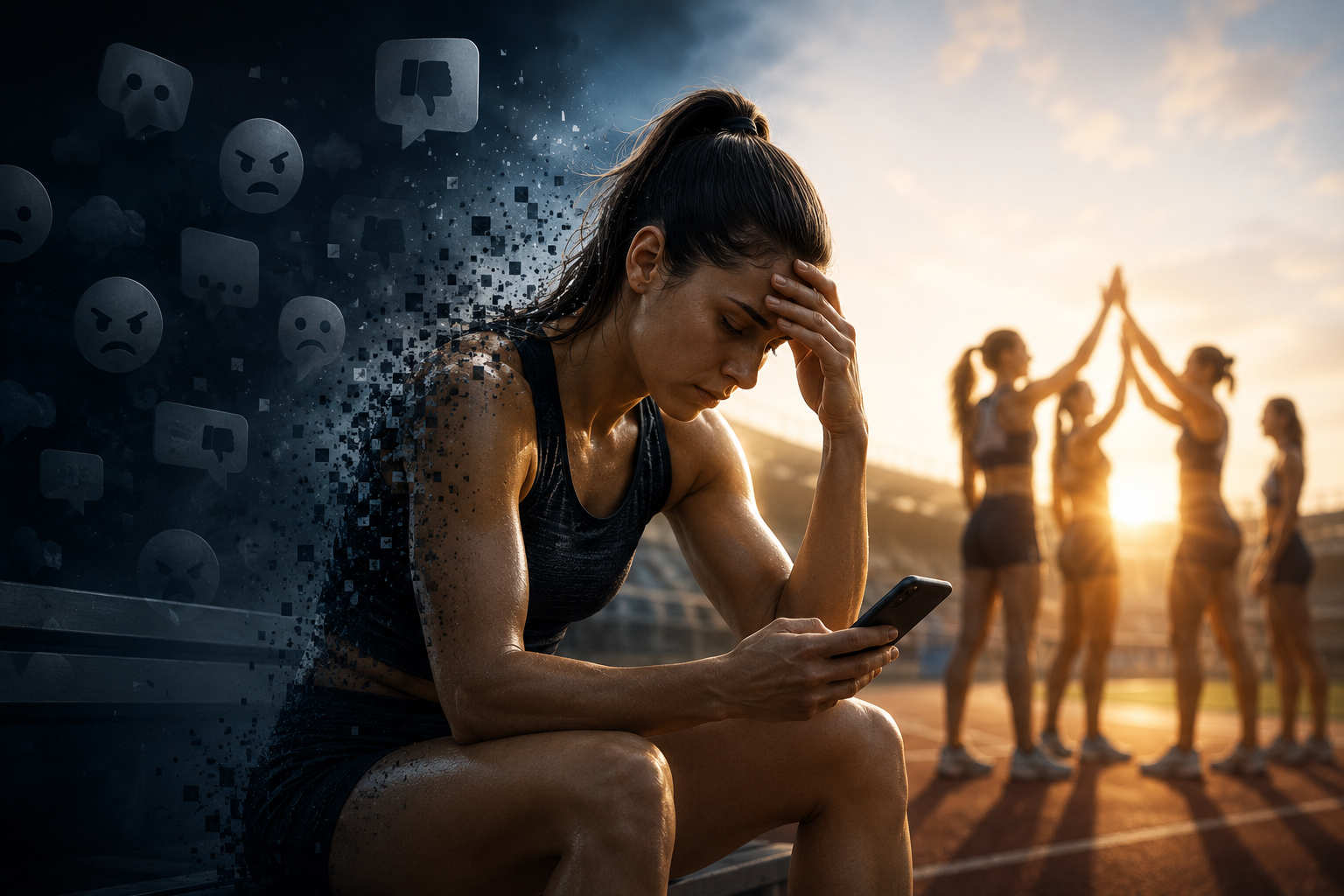
The comments disappear. The impact doesn’t.
A hateful comment can be deleted in seconds. A fake account can eventually be reported. An abusive message may never be seen again.
But what often remains is something far less visible.
For many women athletes, online abuse doesn’t end when they close an app – it follows them into training sessions, competitions, media appearances, and even decisions about whether they want to continue sharing their sporting journey.
The digital world has become an essential part of modern sport. Social media connects athletes with supporters, sponsors, clubs, and opportunities. Yet the same platforms that create visibility can also become spaces where harassment, intimidation, and cyber abuse flourish.
The real cost is rarely measured by the number of offensive comments.
It is measured by the opportunities that quietly disappear.
When athletes become less visible
Many female athletes respond to online abuse by changing their behaviour.
Some stop posting about their achievements.
Others avoid sharing training routines or competition results. Some disable comments, make their profiles private, or disappear from social media entirely.
While these decisions may provide temporary protection, they can also reduce the visibility that athletes increasingly need to build their careers.
Less visibility often means fewer opportunities to connect with fans, inspire young girls, or attract potential sponsors.
The silence becomes another consequence of abuse.
Confidence doesn’t stay online
Online harassment doesn’t remain confined to a phone screen.
Constant criticism, sexist comments, threats, or fake accounts can gradually affect confidence and emotional well-being. Athletes may begin to question themselves before interviews, hesitate to speak publicly, or feel anxious every time they receive a notification.
Over time, this mental burden can affect concentration, motivation, and even sporting performance.
The pressure is no longer only about winning competitions—it becomes about navigating a hostile digital environment.
The opportunities that never happen
Sponsors increasingly look for athletes who actively engage with communities online.
Media outlets seek confident voices.
Sport organisations value ambassadors who inspire participation.
When athletes withdraw from digital spaces because they no longer feel safe, they may unintentionally lose opportunities that have nothing to do with their sporting ability.
The talent remains.
The visibility disappears.
What clubs often don’t see
Coaches and sport organisations usually recognise physical injuries immediately.
Digital harm is much harder to notice.
An athlete who suddenly stops posting, declines interviews, avoids promotional activities, or appears less engaged may not simply be “less motivated.”
She may be trying to protect herself from repeated online abuse.
Supporting athletes today means recognising that safeguarding extends beyond the training ground. Digital well-being should be part of every club’s duty of care.
Building resilience, not fear
Creating safer digital environments requires more than reporting abusive accounts.
Athletes need practical knowledge to protect their online presence, recognise cyber threats, manage privacy settings, and respond confidently to digital harassment.
At the same time, coaches, clubs, and sport organisations need the tools to recognise the hidden consequences of online abuse and create supportive environments where athletes feel safe both on and offline.
This is exactly why the SAFE SPORT project combines cybersecurity education with psychological resilience and practical resources for sport organisations—to ensure that women can participate, compete, communicate, and lead without fear of digital violence.
Sport should never lose talent because of online abuse.
Every athlete deserves to celebrate victories, share experiences, inspire others, and build a career without fear of harassment.
Because the true cost of online abuse is not measured in comments.
It is measured in voices that become silent, opportunities that disappear, and talented women who deserve to be seen.