
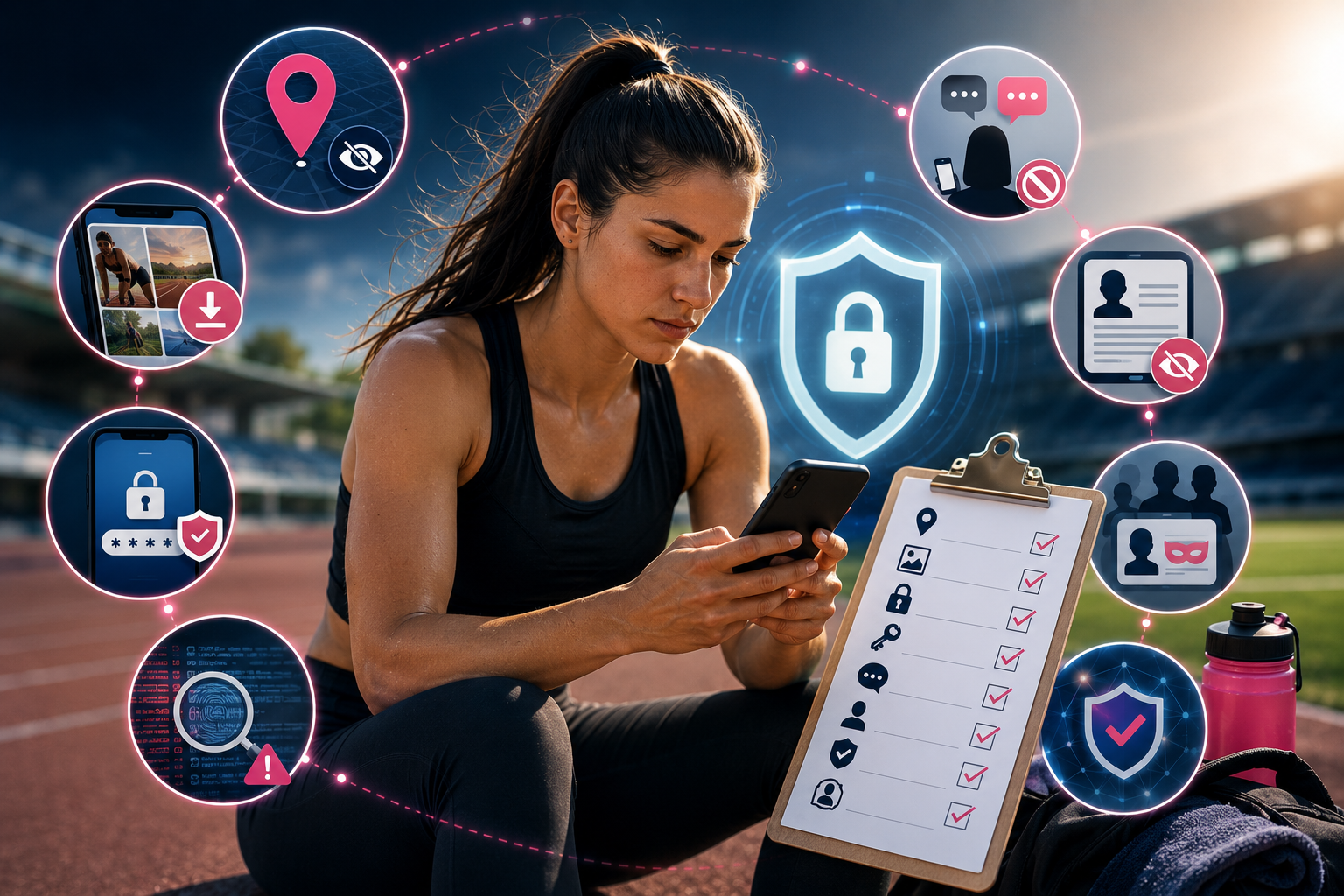
Every post tells a story. Make sure it’s the story you want to tell.
Social media has become an essential part of modern sport. It helps athletes celebrate achievements, connect with supporters, inspire the next generation, and attract new opportunities.
But before you tap “Post,” it’s worth taking a few seconds to think about your digital safety.
Cybersecurity isn’t just about preventing hacked accounts. It’s about protecting your identity, your privacy, your reputation, and ultimately your sporting career.
A few simple habits can make a big difference.
📍 1. Is your location visible?
Sharing your latest training session or competition is exciting—but does your post reveal exactly where you are?
Real-time location sharing can unintentionally expose:
- your daily training routine;
- where you live or stay during competitions;
- places you regularly visit;
- when you’re away from home.
Tip: Consider posting after you leave the venue rather than while you’re still there.
📸 2. Who can download or reuse your photos?
Once a photo is online, you lose much of the control over where it may appear next.
Images can be:
- copied without permission;
- edited or manipulated;
- used in fake profiles;
- shared outside their original context.
Review your privacy settings regularly and think carefully before sharing highly personal images.
Remember: not every moment needs to be public.
🔐 3. Is two-factor authentication enabled?
A strong password is important.
Two-factor authentication (2FA) makes your accounts significantly harder to compromise by requiring an additional verification step before anyone can log in.
Most major platforms—including Instagram, Facebook, TikTok and X—offer this feature.
If you haven’t enabled it yet, today is a good day to start.
🔑 4. Could your password already be exposed?
Many people continue using passwords that have appeared in previous data breaches without even realising it.
If the same password is used across multiple accounts, one breach can affect everything—from social media to email.
Good password habits include:
- using a unique password for every account;
- creating long passphrases rather than simple words;
- storing passwords in a trusted password manager;
- updating passwords if you suspect they have been compromised.
💬 5. Who can contact you?
Not every message deserves access to your attention.
Take a few minutes to review:
- who can send you direct messages;
- who can comment on your posts;
- who can tag or mention you;
- who can add you to group conversations.
Small privacy adjustments can dramatically reduce unwanted interactions and online harassment.
You don’t have to be available to everyone.
👤 6. How much personal information is publicly visible?
Your profile should inspire people—not reveal everything about your life.
Check whether your public profile includes:
- phone number;
- personal email address;
- home address;
- daily routines;
- family information;
- travel plans.
The less unnecessary personal information you share, the lower the risk of identity theft, impersonation or targeted scams.
⚠️ 7. Can your followers recognise your official account?
Fake profiles have become increasingly common in sport.
Help your community recognise your authentic presence by:
- using one consistent username;
- linking your official website or club profile;
- reporting impersonation quickly;
- informing followers if fake accounts appear.
Protecting your identity also protects your supporters.
🤝 8. Think before you engage
Not every comment deserves a response.
Online arguments often attract more attention than positive achievements.
If someone is deliberately provoking or harassing you:
- avoid responding emotionally;
- use reporting and blocking tools;
- keep evidence if necessary;
- seek support from your club or trusted people.
Protecting your well-being is always more important than winning an online argument.
Digital safety is part of athlete development
Today’s athletes train for strength, endurance, technique and performance.
They should also develop the skills to navigate the digital world safely and confidently.
A secure online presence helps athletes:
- build trust;
- protect their reputation;
- strengthen relationships with sponsors;
- engage confidently with supporters;
- focus on what matters most – performing at their best.
Digital safety isn’t about posting less.
It’s about posting smarter.
Before your next post, ask yourself:
✅ Is my location protected?
✅ Am I sharing only what I’m comfortable making public?
✅ Is my account properly secured?
✅ Could this information be misused?
✅ Does this post reflect the athlete and person I want to be?
The strongest athletes don’t just protect their performance – they protect their digital identity too.